
Chongqing Motorcycle Industry: 51 OEMs and 410 Parts Suppliers
From BMW engines to hidden champions: a map of the industrial strength behind China’s motorcycle capital.
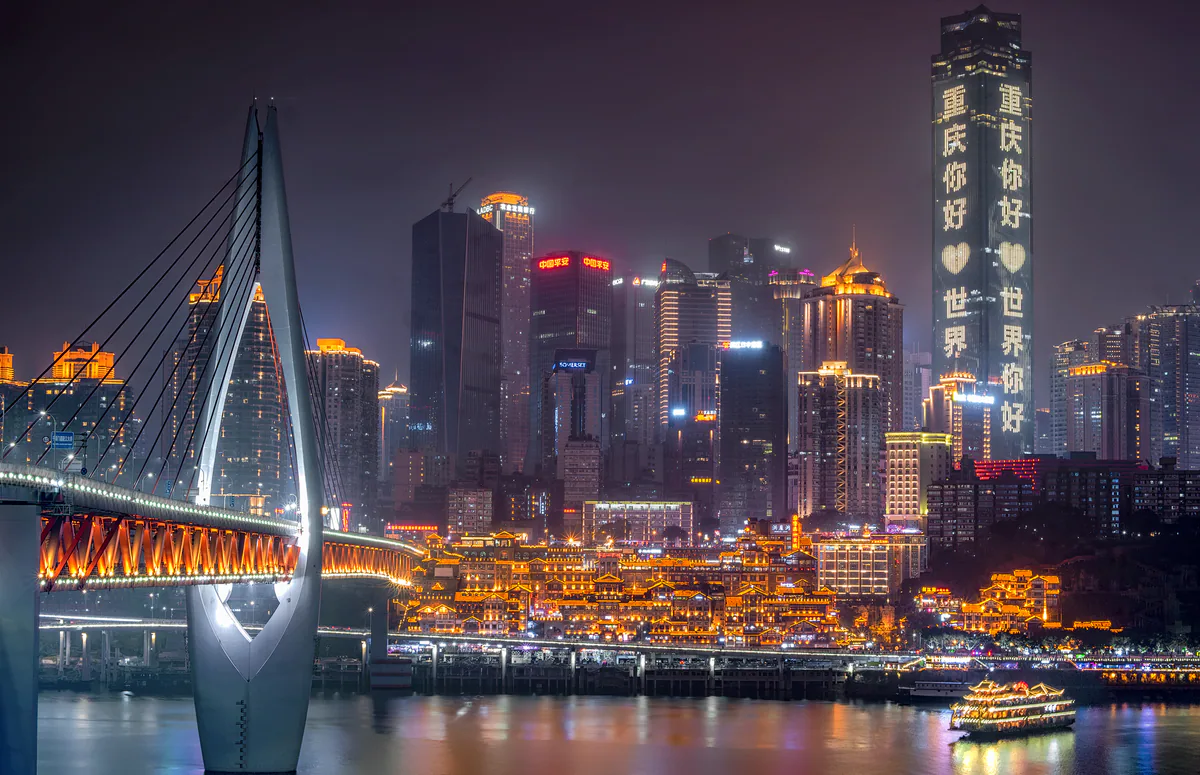
The scale of Chongqing’s motorcycle industry—and why it is called the “motorcycle capital”
In 2025, Chongqing produced 7.857 million motorcycles, accounting for 35.5% of China’s total output and representing year-on-year growth of 18.1%.
Exports reached 6.109 million units, up 21.9%. One in every three motorcycles exported by China came from Chongqing.
Export revenue reached RMB 26.47 billion, an increase of 29.5%. Revenue grew faster than export volume, indicating a shift toward higher-value, higher-quality products rather than simply more low-cost motorcycles.
Growth continued in 2026. During the first five months, Chongqing’s motorcycle exports had already reached RMB 12.21 billion, up 9.8% year on year.
The city is home to 51 major motorcycle manufacturers and more than 410 parts suppliers. The local content rate for petrol motorcycles exceeds 80%.
Annual production capacity exceeds 20 million motorcycles and 20 million engines.
Annual industrial output reached RMB 108.83 billion, up 18.8%.
Five of China’s ten largest motorcycle exporters are based in Chongqing. Five parts manufacturers rank first in China by sales within their respective niches.
Data from leading companies
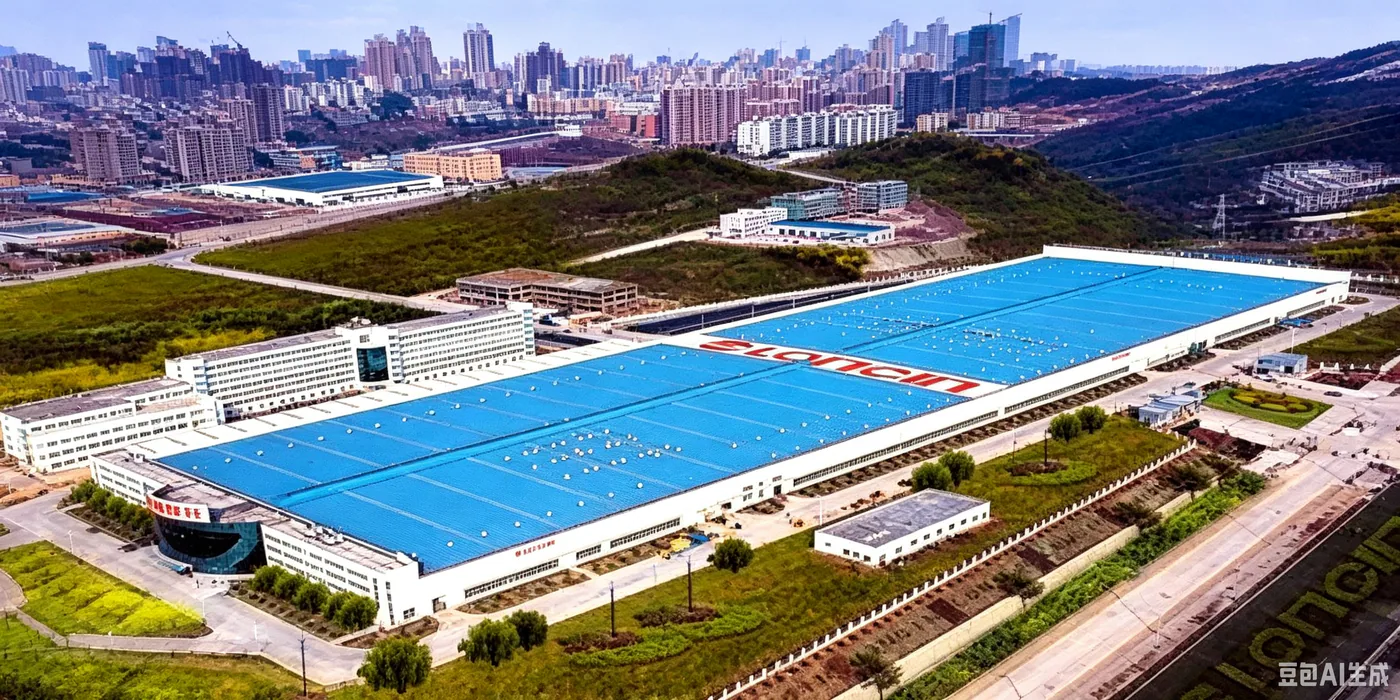
- Loncin — 2025 revenue: RMB 19.135 billion; net profit: RMB 1.648 billion (+46.95%). Annual output: 1.8 million motorcycles and more than 3.3 million engines. Motorcycle and engine business revenue: RMB 14.13 billion.
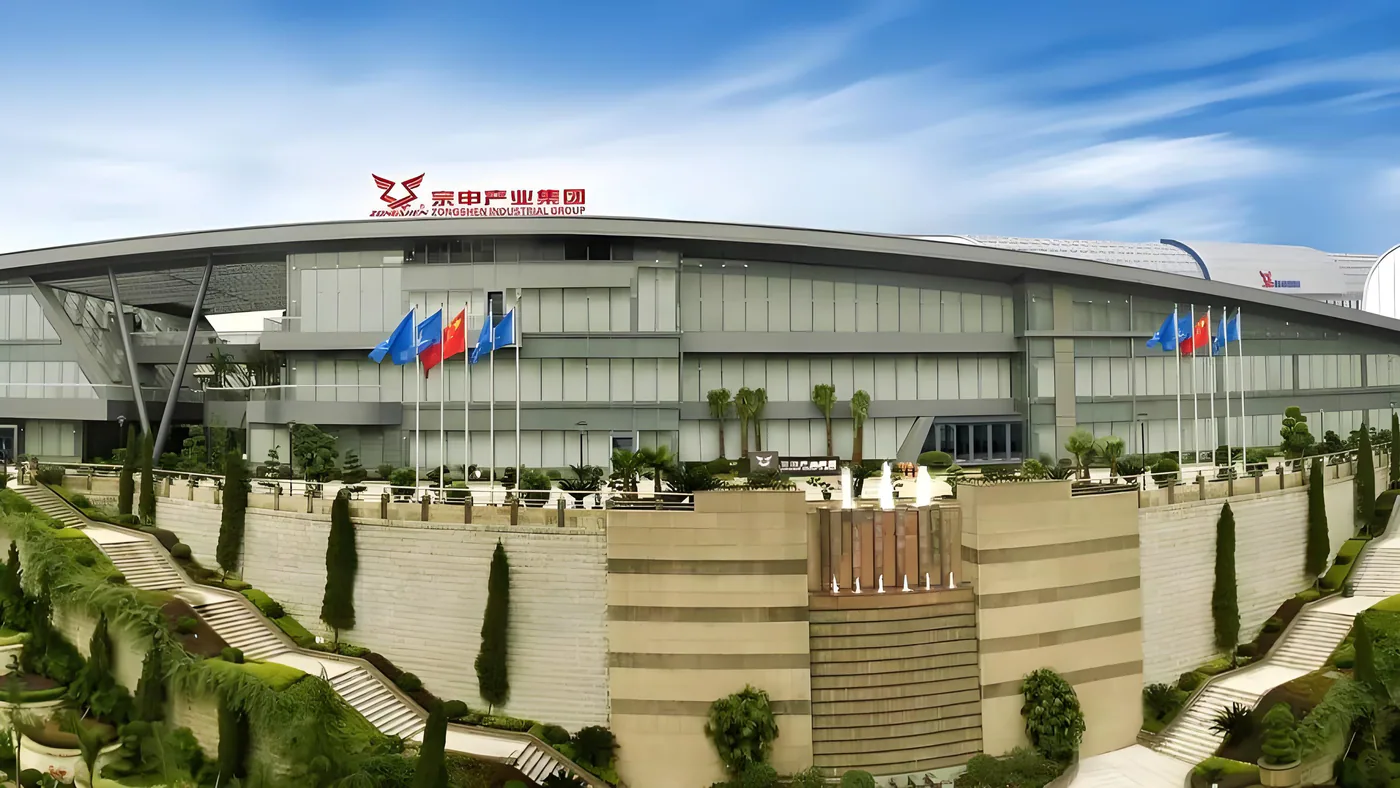
- Zongshen — 2025 revenue: RMB 12.31 billion; net profit: RMB 666 million (+44.25%). Operating cash flow: RMB 1.215 billion. Annual petrol-motorcycle sales exceeded 1 million units.
- The two companies are exchanging assets: Zongshen’s motorcycle and engine division is moving to Loncin, while Loncin’s general-purpose power division is moving to Zongshen. The merger will create the world’s largest motorcycle company.
- Zongshen Industrial Group (including Loncin) employs about 30,000 people. Loncin alone has more than 10,000 employees.
- Production of electric motorcycles reached 3.081 million units, up 54.1% year on year. Seven of China’s ten largest electric-vehicle manufacturers have established production bases in Chongqing.
Direct industry employment is at least 150,000–200,000 people. Indirect employment in logistics, trade, retail, and exhibitions is several times larger.
Including small manufacturers and trading companies, the total number of businesses in the ecosystem is approaching 1,000.
This kind of ecosystem is often described as a “rainforest”: not a collection of isolated tall trees, but a dense, multilayered organism in which every level supports the others.
The three-tier structure of Chongqing’s motorcycle industry
Chongqing’s motorcycle companies are not simply clustered together. The ecosystem has a clear division of labour and a distinct hierarchy.
Tier one: supply-chain leaders—Loncin, Zongshen, and Lifan
All three manufacture complete motorcycles, but their central value lies in their engine platforms.
Loncin covers engines from 150cc to 900cc. Its partnership with BMW began in 2007 with a 650cc single-cylinder engine and expanded in 2013 to inline twin-cylinder engines.
The technology accumulated through this cooperation became the foundation of Loncin’s own power platforms.
In 2025, Loncin’s own brand VOGE generated RMB 3.95 billion in revenue, up 25%. VOGE holds about 4.5% of registrations across Europe’s five largest markets—the highest share among Chinese motorcycle brands.
In Spain, VOGE has a 7% market share and ranks fourth among all brands. VOGE motorcycles are displayed in dealer showrooms alongside BMW and Ducati.
Zongshen’s premium brand Cyclone launched the RA1000 in 2025, China’s first litre-class sport cruiser, filling a gap in the market.
Lifan’s 150–250cc single-cylinder platforms power motorcycles used in many countries around the world.
What distinguishes these leaders is scale, deep technical capability, and the ability to pull the entire supply chain forward. Loncin alone is connected to more than 700 supplier companies.
Tier two: the second line—Yinxiang, Shineray, Bashan, Jianshe, and Runtong
Each has its own specialisation.
Shineray focuses on retro and enduro motorcycles. In 2025, its flagship retro model sold out in the primary European market.
Its 250cc ADV scooter—with a horizontally opposed twin-cylinder engine and wet CVT—is the only product of its kind in the segment.
Runtong produces 350,000 motorcycles per year, all for export. It is a classic example of a second-tier, export-oriented manufacturer.
Zhang Xue Motorcycle has delivered one of the most striking breakthroughs in recent years. In under two years, the team secured five victories in the World Superbike Championship (WSBK).
The winning 820RR uses 97% Chinese components. Its three core systems—engine, chassis, and control—were developed and manufactured entirely in-house.
Zhang Xue himself said: “Chongqing is the city with the most complete motorcycle supply chain in all of China.”
Tier three: hidden champions—410 parts manufacturers
Among more than 400 parts factories, five rank first in China within their respective niches.
You may never have heard their names, but procurement teams at global brands know them well. Without this tier, the first tier could not produce a single motorcycle.
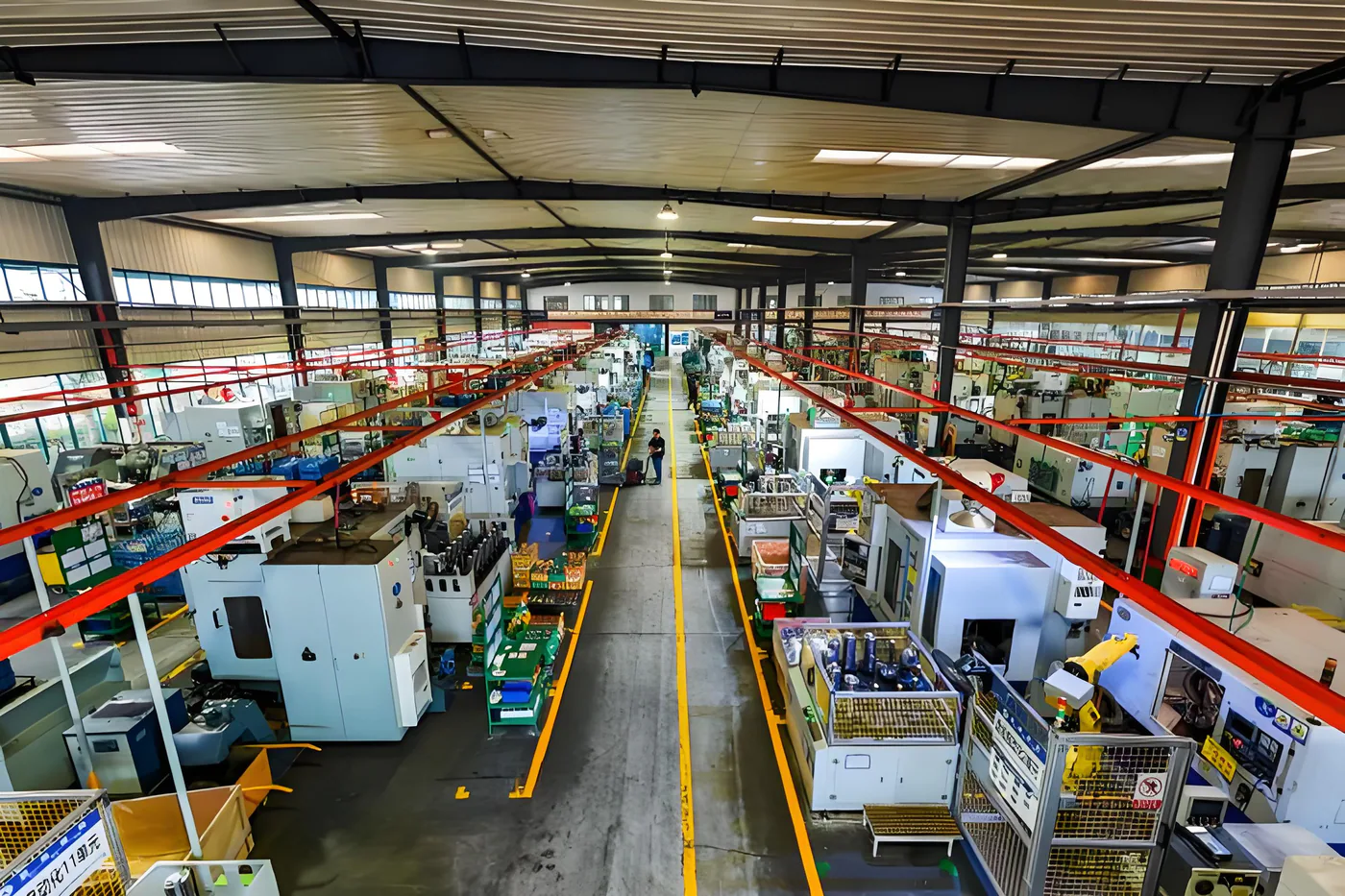
Hidden champions: they do not build motorcycles, but the global industry depends on them
Qiutian Gear—used in one in every five motorcycles worldwide
One in every five motorcycles worldwide uses Qiutian gears. Its customers include Honda, BMW, Piaggio, BYD, and Changan.
A gear is one of the most precise components in a transmission. Qiutian’s equipment operates at micron-level accuracy. A human hair is about 70 microns in diameter, and its tolerances are measured on that scale.
Bought a BMW in Europe? Repairing a Honda in Southeast Asia? Its gears may well have come from a factory in Chongqing’s Dadukou district.
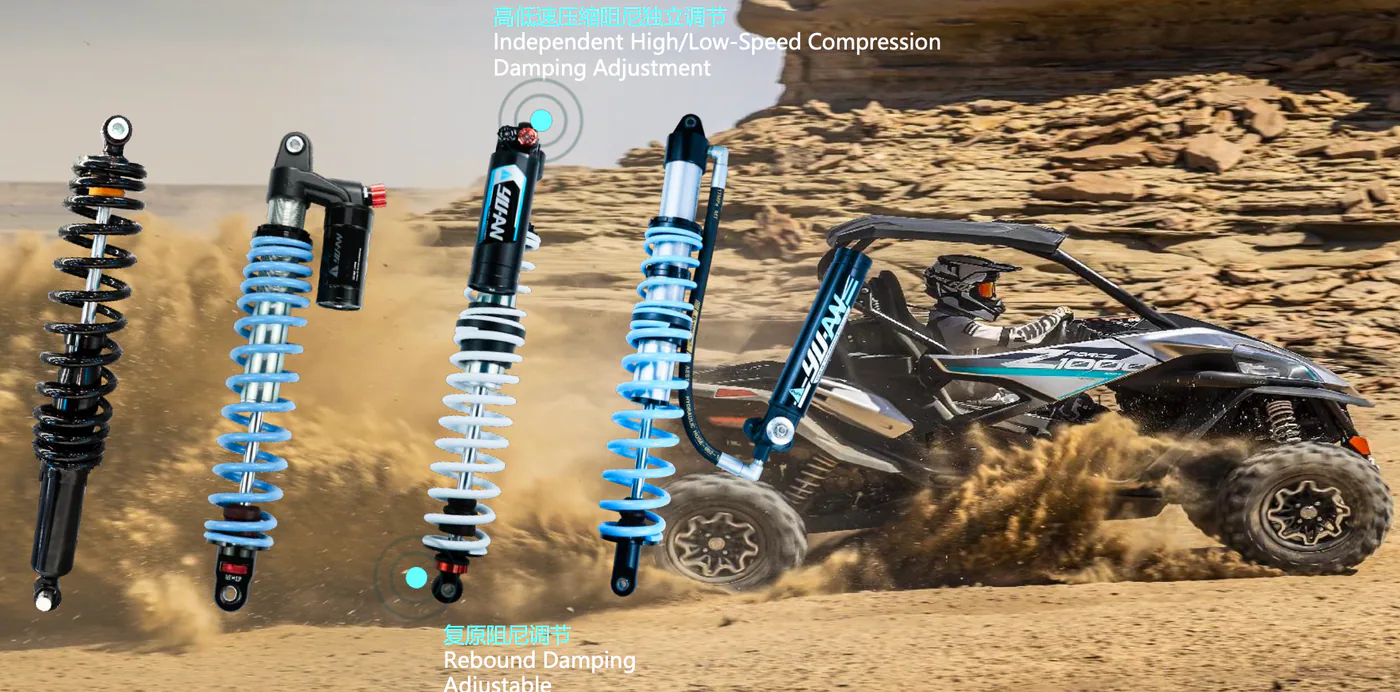
Yu’an Intelligent Suspension—suspension supplier for a championship-winning motorcycle
Yu’an supplies the front suspension for the championship-winning Zhang Xue 820RR.
A single shock absorber contains more than 130 parts, is designed to Dakar Rally standards, and has completed more than one million test cycles. The company has served 60 million end users worldwide.
The company broke the technological monopoly of overseas manufacturers in the premium motorcycle suspension segment.
Its shock absorbers leave a smart factory in Changshou district, are fitted to a championship motorcycle, and go on to win at world-class races.
Yujiang Die Casting—world number one in cylinder blocks
Yujiang ranks first worldwide by market share in cylinder blocks. It supplies Loncin, Zongshen, and virtually every motorcycle manufacturer in Chongqing.
Customers of Chongqing’s die-casting cluster include leading Chinese automakers and selected joint ventures with Japanese brands.
An aftermarket engine side cover may be cast in the same industrial cluster as an original-equipment part.
Jieli Wheel + Zhicheng Machinery
- Jieli Wheel: a leading Chinese exporter of aluminium wheels, with products accepted into international premium supply chains.
- Zhicheng Machinery: annual capacity exceeds 13 million motorcycle cylinder heads, ranking first in China within its segment.
Zongshen engines, Zhicheng cylinder heads, Jieli wheels, and two other companies—a total of five Chongqing parts manufacturers—rank first in China in their respective niches.
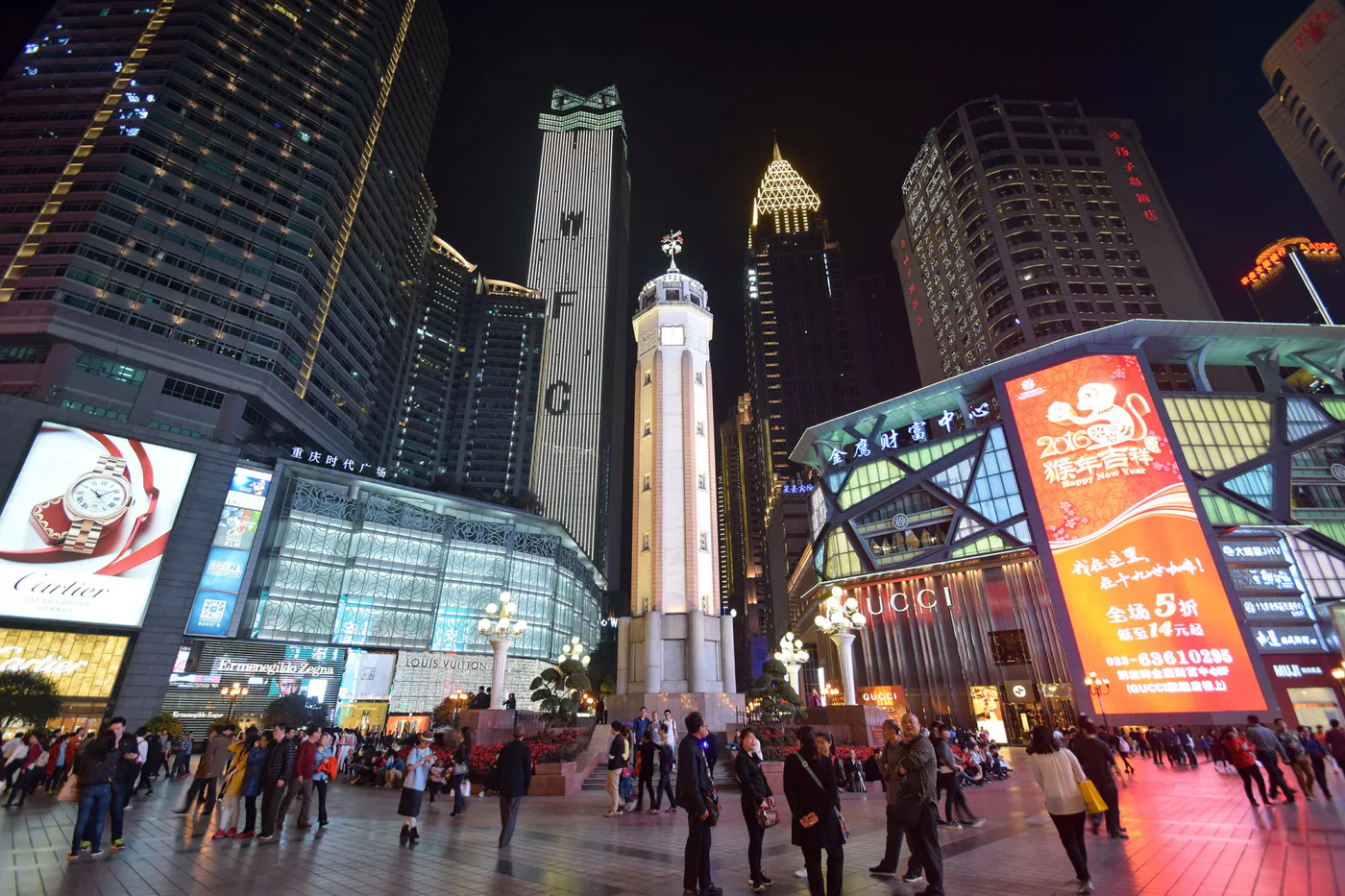
Manufacturing capability within a 40-kilometre radius
The founder of Zhang Xue Motorcycle said: “Within a 40-kilometre radius of Chongqing, you can build a complete motorcycle—from the smallest screw to the engine.”
This is not an exaggeration. Every motocross component—engine, frame, suspension, wheels, brakes, plastics, wiring, and lighting—has suppliers in Chongqing.
Prototype development time can be reduced to one-third of that required in other manufacturing regions.
The density of this manufacturing cluster is exceptional:
- Loncin alone is connected to more than 700 supplier companies. They are spread across Chongqing, from tier-one direct suppliers to tier-three raw-material providers, forming an extremely dense network.
- The local content rate for petrol motorcycles exceeds 80%. More than 80% of parts can be sourced without leaving Chongqing. For electric motorcycles, the figure has reached 60%.
- Production capacity: 20 million motorcycles and 20 million engines per year. Even if global motorcycle demand doubled, Chongqing’s capacity pool could absorb it.
More important, however, is the depth of the cluster.
“Chongqing has 410 parts factories” is more than a headline number. In each core category, buyers can typically choose from three to five suppliers.
Need pistons? There are suppliers in the Loncin system, suppliers in the Zongshen system, and independent piston factories. Need suspension? Yu’an leads the field, but several second-tier manufacturers are also available.
This competitive depth creates flexibility in pricing and lead times.
It did not emerge overnight. Chongqing’s motorcycle industry began in the 1980s and has accumulated a complete range of capabilities over four decades—from raw-material processing to complete-vehicle assembly.
Die casting, forging, machining, heat treatment, surface finishing, and inspection assembly all have specialised companies, with more than one supplier competing at every stage. That is what defines a genuine industrial cluster.
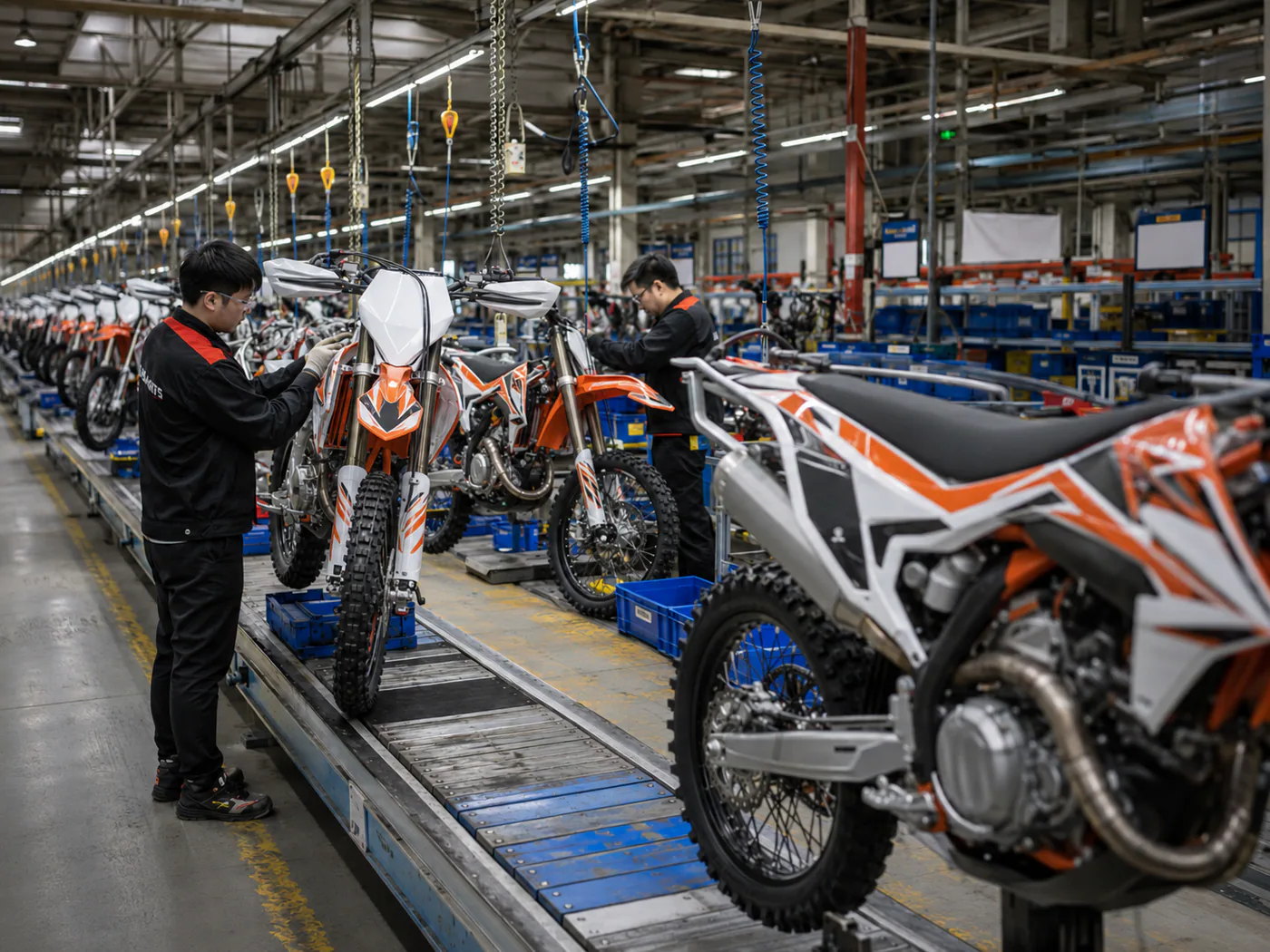
The real challenges in Chongqing’s motorcycle supply chain
Quality variation at small factories is common, not exceptional
Consider the same factory and the same piston model. The first batch of 100 sets is acceptable, with tolerances within specification.
In the second batch of 100 sets, the piston-pin bore is out of round and outside tolerance. After 50 operating hours, the piston begins to knock.
Large factories such as Loncin, Zongshen, and Qiutian have mature quality-control systems. This does not mean problems never occur, but issues can be traced to a specific batch.
At a small factory, quality may depend on whether the owner was on the shop floor that day.
Do not simply trust the claim, “We use the same supplier as a major brand.” One supplier may operate several quality grades and ship different products to different customers.
Lead-time promises assume that everything will go perfectly
A factory promises delivery in 30 days. In practice, 45–50 days is common.
The quoted “30 days” assumes raw materials arrive on time, equipment does not fail, and a major customer does not insert an urgent order into the schedule.
When raw-material prices rise, factories prioritise large customers, while smaller orders move to the back of the queue.
A supplier that voluntarily says, “This batch may be delayed by around ten days,” is more reliable than one that promises, every time, that “there will be no problems.”
Key figures for Chongqing’s motorcycle industry
| Indicator | Value |
|---|---|
| 7.857 million units | Chongqing motorcycle production in 2025, first in China (35.5%) |
| 6.109 million units | Exports in 2025, +21.9% |
| RMB 26.47 billion | Export revenue in 2025, +29.5% |
| RMB 12.21 billion | Exports during the first five months of 2026, +9.8% |
| RMB 108.83 billion | Industrial output in 2025, +18.8% |
| 51 + 410 | Major motorcycle manufacturers + parts suppliers |
| >80% | Local content rate for petrol motorcycles |
| >20 million units | Annual production capacity (motorcycles + engines) |
| RMB 19.135 billion | Loncin revenue in 2025 |
| RMB 12.31 billion | Zongshen revenue in 2025 |
| RMB 3.95 billion | VOGE revenue in 2025 |
| 3.081 million units | Electric-motorcycle production in 2025, +54.1% |
| 5 companies | Parts manufacturers ranked first in their niches in China |
| 5 of 10 | Five of China’s ten largest motorcycle exporters are based in Chongqing |
| 150,000–200,000 people | Direct industry employment (conservative estimate) |
| ~1,000 | Total businesses, including small manufacturers and trading companies |
This map will continue to be updated. Once the 2026 annual reports are released, the combined figures for Loncin and Zongshen should be even more impressive.
📮 Follow MX2T4T for news and analysis from Chongqing’s motorcycle industry.
TG / INS / YouTube: @MX2T4T
COMMENTS
Please leave your comment.
Comments are reviewed before publication.